
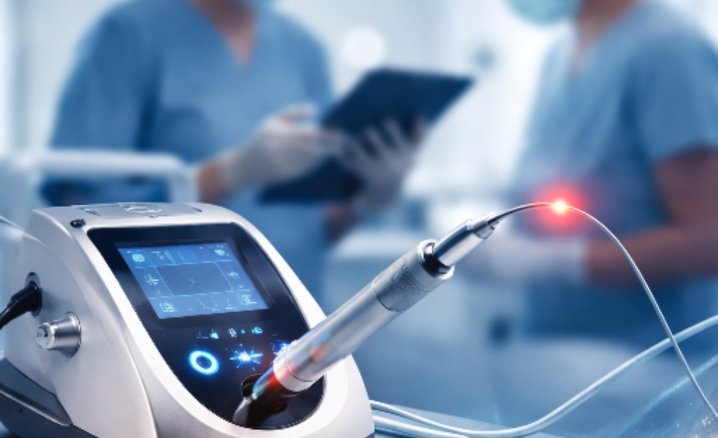
Modern clinical practice is increasingly shaped by technologies that translate complex physical principles into simple, effective, and patient-centered solutions. Among these, light-based technologies — particularly laser and photobiomodulation systems — represent a powerful example of how science can move seamlessly from the laboratory into everyday healthcare decision-making.
At its core, laser technology is not merely a tool but a controlled interaction between light energy and biological tissue. When used with a sound understanding of tissue optics, thermal behavior, and cellular response, lasers enable clinicians to diagnose earlier, intervene more conservatively, and treat more precisely than ever before. This marks a significant shift from traditional mechanically driven interventions toward biologically respectful and minimally invasive care.
One of the most important technological advances is the use of light to enhance early diagnosis and prevention. Optical detection methods can identify subtle structural changes before they become clinically visible. This allows practitioners to intervene at a stage where disease is still reversible, reducing the need for aggressive treatments. Light-assisted diagnostics support a preventive model of care that prioritizes preservation over replacement, making treatment more comfortable for patients and more sustainable for healthcare systems.
Beyond diagnosis, lasers offer unique advantages in tissue management. Because laser energy can be finely controlled in terms of wavelength, power, and exposure time, clinicians can achieve highly selective tissue interaction. This means abnormal tissue can be targeted while surrounding healthy structures remain largely unaffected. Such precision results in reduced bleeding, minimized postoperative discomfort, lower infection risk, and faster healing — outcomes that benefit both patients and clinicians.
Another key development is the growing role of photobiomodulation — the therapeutic use of low-level light to stimulate biological processes. Rather than cutting or ablating tissue, this form of light therapy works at the cellular level, enhancing mitochondrial activity, increasing ATP production, reducing inflammation, and modulating pain pathways. These effects make photobiomodulation valuable not only for local treatment but also for supporting musculoskeletal healing, nerve regeneration, and postoperative recovery across multiple clinical disciplines.
Underlying all of these applications is a critical technological principle: understanding how energy behaves inside living systems. Heat dynamics, absorption coefficients, scattering, and reflection all influence how light interacts with tissue. Without this foundational knowledge, technology becomes something that is merely “used.” With it, technology becomes something that is intelligently applied, adapted, and optimized for each clinical scenario.
The real transformation lies not just in the devices themselves but in the mindset they encourage. Light-based technologies push healthcare toward precision, conservation, and biological harmony. They support a model in which clinicians intervene earlier, act more gently, and think more systemically about healing rather than simply treating symptoms.
In this way, laser and light technologies represent more than innovation — they represent a philosophical evolution in healthcare. One where physics meets physiology, where technology enhances empathy, and where treatment is guided not only by what can be done, but by what should be done for long-term health, safety, and patient well-being.