
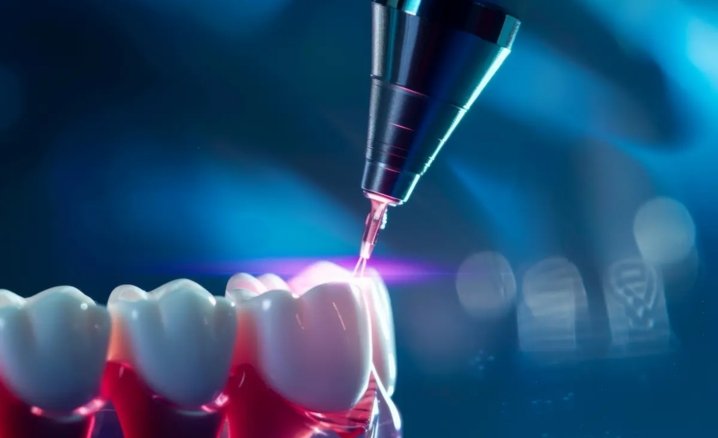
Laser dentistry is rapidly evolving from a technique-driven specialty into a technology-led clinical science, shaped by deeper insight into how light interacts with living tissue. This shift is redefining innovation—not through newer devices alone, but through smarter, more precise use of energy.
One of the most significant technological advances is the reframing of light as a therapeutic agent rather than a passive tool. When delivered with accurate parameters, laser energy produces measurable biological responses at the cellular level. Wavelength selection, power density, exposure time, and tissue characteristics collectively determine outcomes. This has positioned photobiomodulation as a precision biological therapy, comparable to pharmacological interventions that demand strict dosage control and protocol discipline.
Innovation in laser dentistry now relies heavily on understanding energy–tissue dynamics. Heat generation, absorption, scattering, and dissipation are no longer abstract physics concepts but practical variables that influence safety, predictability, and clinical success. When clinicians understand the thermodynamic behavior of laser energy, procedures become controlled rather than intuitive. This knowledge-driven approach reduces collateral tissue damage, enhances healing, and increases procedural confidence.
Another major technological leap is the expansion of laser applications beyond cutting and coagulation. Modern protocols demonstrate how laser systems can modulate inflammation, stimulate cellular metabolism, and influence neuromuscular and glandular function. This positions lasers as functional and regenerative technologies, capable of supporting tissue recovery and physiological balance. The innovation lies not in higher power output, but in refined energy delivery aligned with biological objectives.
Laser dentistry is also benefiting from advancements in clinical translation models. Structured learning systems that connect theoretical parameters directly to real-world application have become essential for technology adoption. Guided visualization, controlled demonstrations, and calibrated hands-on execution allow users to understand not just how to use laser systems, but why specific settings produce specific outcomes. This mirrors innovation frameworks seen in biomedical engineering, where technology training emphasizes systems thinking over isolated techniques.
From a broader perspective, laser dentistry is increasingly recognized as a convergent discipline, integrating physics, biology, and clinical engineering. Devices are no longer evaluated solely on features or brand differentiation, but on their ability to deliver reproducible, biologically meaningful results. Precision, consistency, and safety are becoming the true markers of innovation.
Importantly, this evolution also elevates patient care standards. Predictable energy delivery leads to reduced postoperative discomfort, faster recovery, and improved long-term outcomes. As technology becomes more precise, variability decreases—benefiting both clinicians and patients.
The future of laser dentistry will not be defined by novelty, but by intelligent application of light-based technology. Innovation will continue to favor systems that respect biological limits, leverage scientific principles, and prioritize outcome-driven design.
Laser dentistry is no longer just about adopting advanced tools. It is about engineering biological responses through controlled energy, transforming light into one of the most sophisticated therapeutic technologies in modern clinical practice.
Hello This is test comment